Memory
Kleo Memory is the feature that makes your writing feel personal, consistent, and deeply “you.”
Instead of starting from zero every time you open the chat, Kleo automatically remembers the things that matter most about your writing and your personal brand.
What is Kleo Memory?
Kleo Memory is your persistent writing brain inside Kleo.
For example, it stores important details about:
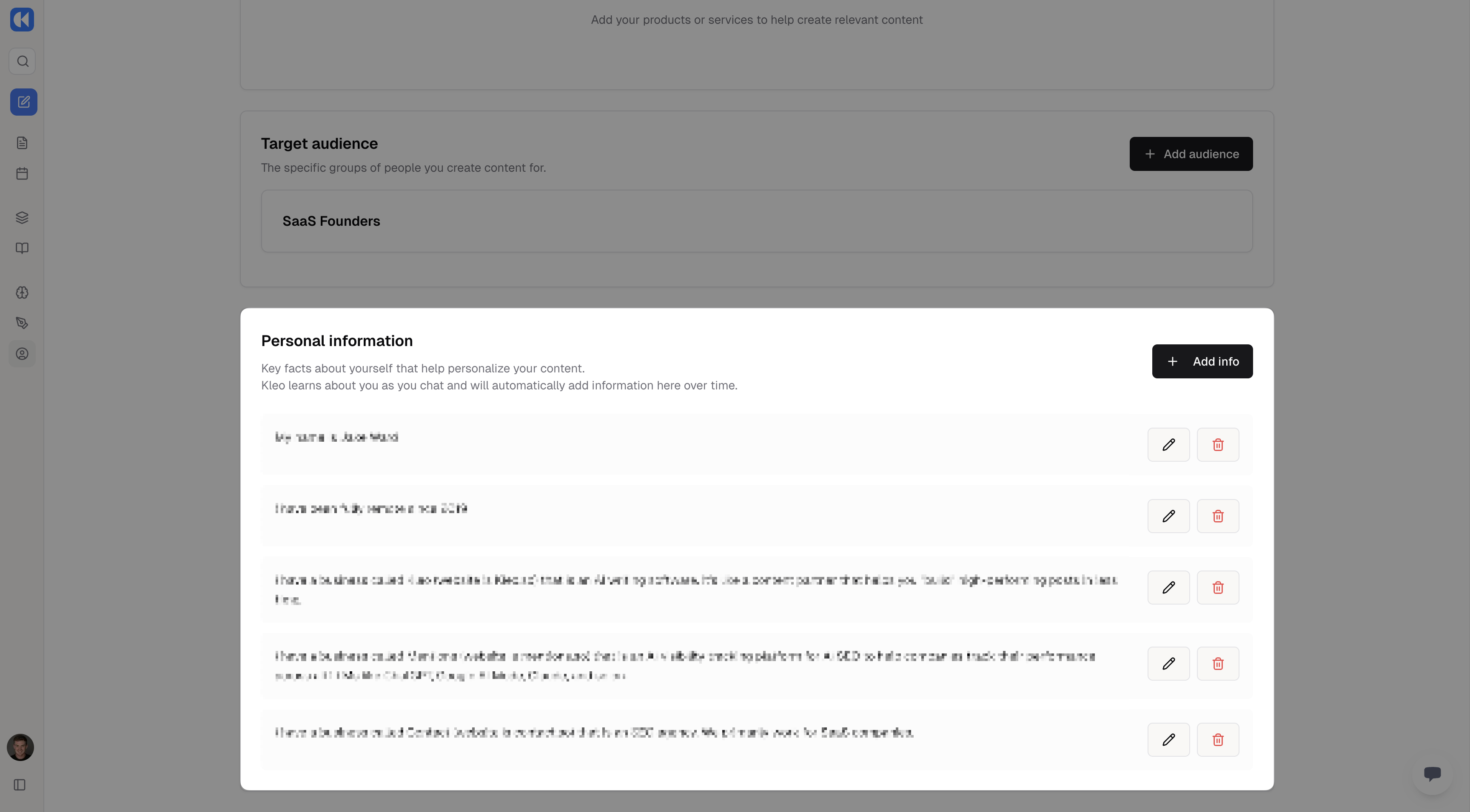
Your identity:
Who you are
Niche or industry
Experiences
Personality traits
Values
Business or profession
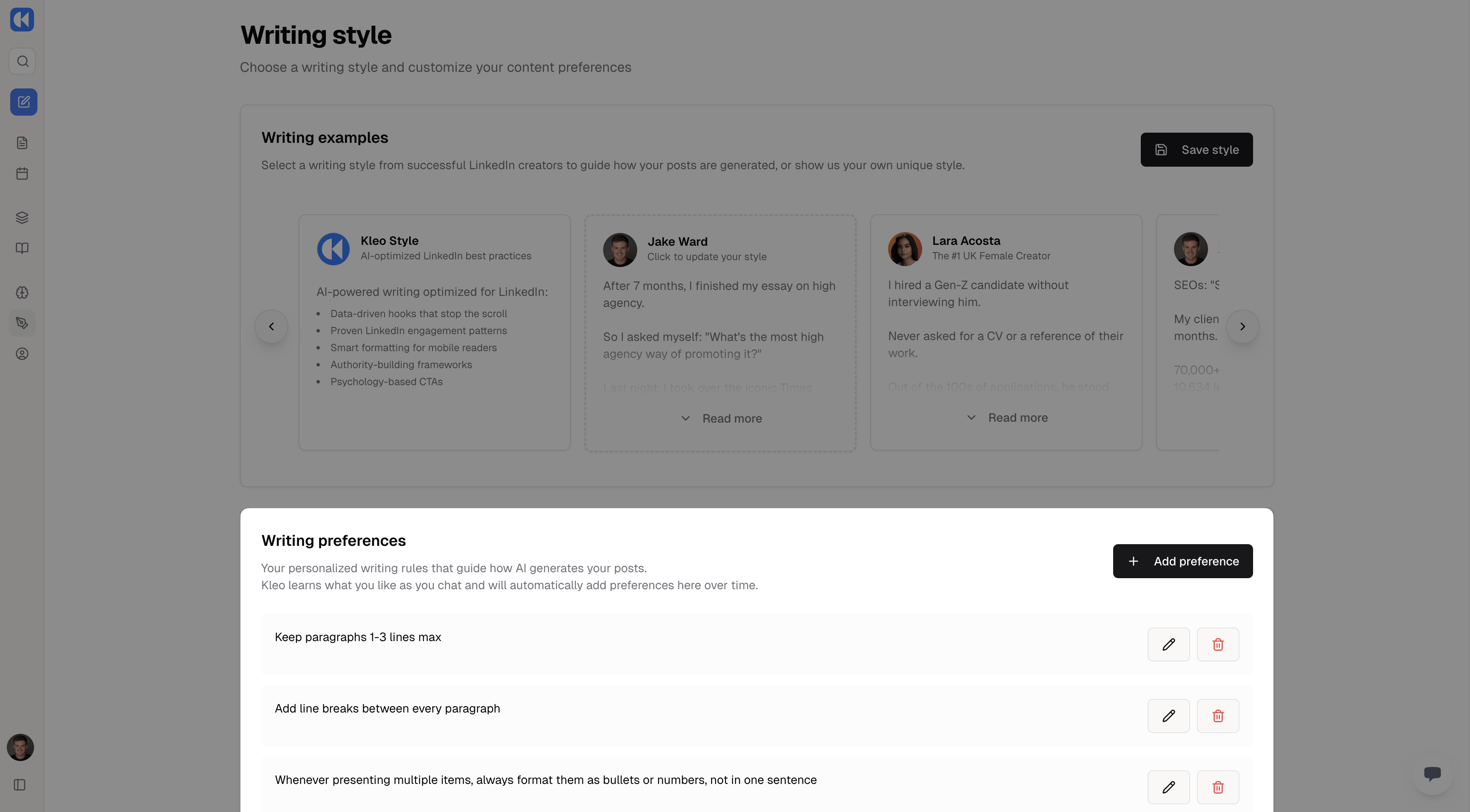
Your writing style:
Voice and tone
Writing patterns
Sentence structure
Closing posts
Structure ideas
Things you avoid
Whenever you create a post, Kleo loads this memory in the background.
You get a writing assistant that improves over time, not a blank-slate model that forgets everything (every time).
How to import memories into Kleo
If you’ve been using another AI platform like ChatGPT, you can bring your memories from those platforms directly into Kleo in a couple of minutes.
Importing these memories instantly gives Kleo your tone, preferences, and brand context, so you don’t have to rebuild anything from scratch.
Follow the below steps to import your memories:
Open your AI platform (like ChatGPT)
Copy and paste the below prompt
Go to your Settings > Import memories
Copy and paste the output from your AI platform
Click 'Import memories' (it takes up to 3 minutes)
Here's the prompt:
I want you to generate a complete “Memory Transfer” based only on what you know about me from our past conversations.
The goal is to help another AI (Kleo) write content in my exact voice, tone, perspective, and style.
Focus ONLY on information that helps an AI understand who I am, how I think, how I communicate, and what I create content about.
Structure the “Memory Transfer” using the sections below, and fill each with maximum detail:
1. Who I Am (Personal Background)
My full name (if known)
Key personal details that meaningfully shape my worldview or content
Experiences, stories, or life context that influence my perspective
Personality traits that show up consistently
Values, beliefs, and motivations
Topics from my personal life I might write about
2. What I Do (Professional Identity)
My current and past professions, roles, and areas of expertise
Industries I work in or care about
Skills or knowledge I’m known for
How I position myself professionally
The type of audience I speak to
3. My Projects, Businesses & Work
For each business, project, or venture I’ve discussed:
Name (if known)
What it is / what it does
My role and responsibilities
Stage (building, launched, scaling, paused, etc.)
How it influences my content
4. My Goals & What I’m Trying to Achieve
Long-term goals
Themes or ambitions that show up repeatedly in conversation
Any KPIs, growth targets, or milestones I’ve mentioned
5. How I Write (Voice, Tone & Style)
My writing voice (e.g., direct, story-driven, contrarian, educational, punchy)
Tone I naturally use
My typical pacing, sentence structure, and vocabulary patterns
How I open content (hooks I gravitate to)
How I structure ideas
How I close posts
Formatting preferences (bullets, spacing, short paragraphs, etc.)
Things I avoid (words, punctuation, formats, tones)
6. What I Talk About (Content Topics & Themes)
My main content pillars
Recurring topics I return to
My expertise-driven themes
Personal themes I mention or reference
Strong opinions, contrarian takes, or unique viewpoints
7. My Working Style With AI
How I give instructions
How I like AI to respond
Preferred formats
Preferred level of detail
Any patterns in how I think, plan, or create
8. Anything Else That Would Help Another AI Write Like Me
Additional context that would influence my writing
Any nuance in my worldview, tone, or personality
Any creative habits or quirks
**Only use information explicitly mentioned in our conversations. If something wasn’t discussed, write “Unknown.”
Present the final export in clear, structured sections exactly as listed above.**
How to save new memories in Kleo
Kleo makes it easy to save important details about your style, brand, or clients directly from the chat. Any time you tell Kleo something you want it to remember, Kleo will store it in your Memory instantly, no settings menu required.
How to tell Kleo to remember something
Whenever you’re chatting with Kleo, simply say:
“Remember this”
“Always do X”
“Add this to my memory"
And similar prompts...
If you phrase something as a rule, preference, or long-term fact, Kleo will automatically treat it as memory unless you specify otherwise.
Examples of good memory saves
"Never use emojis"
“Don't use rhetorical questions (remember this)”
“Always avoid long intros, jump straight into the point”
“Add this to my memory: I've been full remote since 2019"
How to update memories in Kleo
If you ever want to update a memory, simply tell Kleo:
“Update my memory: [insert instruction here]”
Kleo will overwrite or refine the previous details so your post stays aligned with your current brand and information.
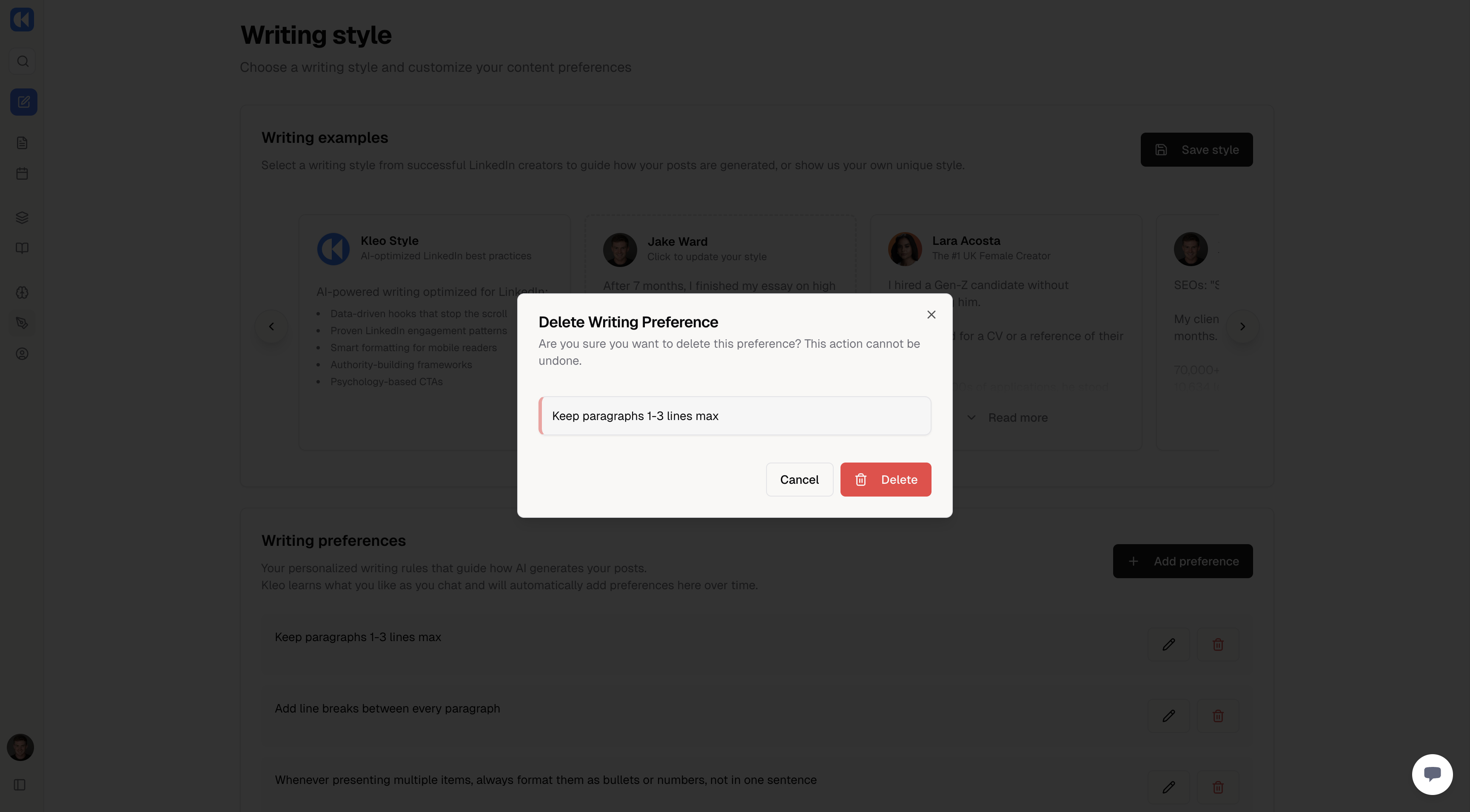
Or simply update and delete in the Identity or Writing Style memories: